
MUAC achieves record-breaking 2025 traffic volumes while maintaining elite safety and efficiency standards across European airspace.
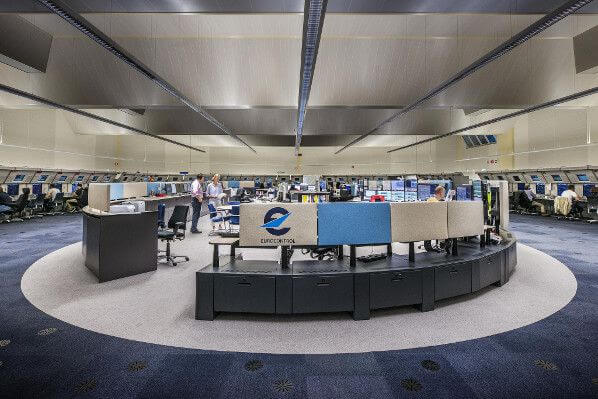
EUROCONTROL MUAC reports strong performance in 2025, safely handling over 1.8 million flights, marking a pivotal moment for European aviation recovery and operational excellence. Personally, I find these figures staggering when you consider the complexity of the « Maastricht » sectors, which remain some of the busiest and most congested in the world.
Welcome back to AeroBernie! If you follow the industry closely, you know that the Maastricht Upper Area Control Centre (MUAC) is the heart of North-Western European air traffic. In this article, I will take you through the incredible data from the past year and explain why these results matter for your future travels.
Record-Breaking Traffic Volumes in 2025
In 2025, MUAC managed a total of 1,829,242 flights. This isn’t just a number; it is the highest volume of annual traffic managed by the center since the pandemic, representing a 2% increase compared to 2024. For me, the most impressive part of this growth is how the team handled the summer rush.
Between June and September, the center managed over 677,000 flights, averaging about 5,600 per day. I was particularly struck by the record set on July 4th, 2025, when MUAC handled 5,831 flights in a single 24-hour period. To keep the skies safe under that kind of pressure is a testament to the operational agility of the controllers and support staff.
You might also be interested in how the broader EUROCONTROL network coordinates these massive movements across the continent.
Exceptional Delay Management and Efficiency
When I look at performance reports, I always check the delay statistics first. In 2025, the average delay per flight at MUAC was only 0.28 minutes (16.8 seconds). This is significantly better than the EU-driven target of 0.31 minutes.
How did they do it? It comes down to stable air traffic controller (ATCO) staffing and high-level tactical management. While other regions struggled with bottlenecks, MUAC’s proactive planning ensured that you, the passenger, spent less time waiting on the tarmac and more time in the air.
Innovative Airspace Optimisation Projects
Efficiency isn’t just about speed; it’s about the geometry of the sky. In 2025, MUAC successfully implemented major airspace redesign projects. This included a new structure over the Netherlands and Northwest Germany.
One move that I personally think was long overdue was the straightening of the boundary between MUAC and Reims ACC. By removing zig-zags in flight paths, MUAC has increased capacity and allowed for more direct routes, which is a win for both airlines and the environment.
EUROCONTROL MUAC: Civil-Military Synergy
The sky is a shared resource, and 2025 was a landmark year for civil-military cooperation. A major milestone was the successful operation of a German Heron TP unmanned aerial vehicle (UAV) within MUAC-controlled airspace.
Integrating drones into civil airspace is the « next frontier, » and seeing the Bundeswehr work so closely with MUAC gives me great confidence in the safety of future UAV integration. Additionally, MUAC’s support during the 2025 NATO Summit proved their ability to handle high-security operations without compromising civilian traffic flow.
Environmental Commitments and CO2 Savings
We are all concerned about the carbon footprint of flying. In 2025, MUAC’s ATM Portal offered airlines new, more efficient routings, leading to an estimated CO2 saving of 811,692kg.
Furthermore, by managing 27,000 Extended Arrival Management (XMAN) requests for airports like Heathrow and Schiphol, they reduced the time aircraft spent in « holding stacks. » Less circling means less fuel burned, which is exactly the kind of sustainable aviation initiative I love to see.
Commenting on MUAC’s performance during 2025,Peggy Devestel, Director of MUAC, said:
“I am very pleased with our performance in 2025 which demonstrates MUAC’s ability to deliver safe, consistently reliable and effective services to all our airspace users, whether civil or military, in a complex and ever-evolving traffic environment. Our strong performance was achieved through effective forward planning, operational agility that allowed us to overcome capacity challenges, stable staffing levels as well as close collaboration with our airspace users, partners and neighbouring centres. It was underpinned by our robust technical systems and by the hard work and dedication of the entire MUAC Team.”
Training the Next Generation of Controllers
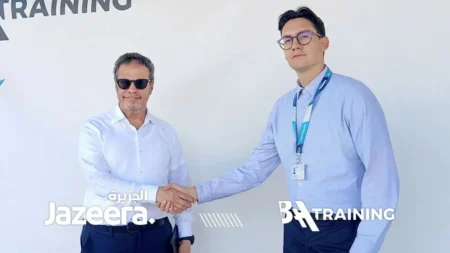
To keep this momentum going, MUAC is investing heavily in people. In 2025, they partnered with GATE Aviation Training in Copenhagen. The first group of ten student controllers has already finished initial training and will start operational work in February 2026.
Looking ahead, the plan is to recruit over 100 new controllers. If you’ve ever dreamt of a career in the area control center), now is the time to look into their recruitment programs.
FAQ: EUROCONTROL MUAC 2025 Performance
MUAC safely managed 1,829,242 flights in 2025, which represents a 2% increase over the previous year and a post-pandemic record for the center.
The average delay was just 0.28 minutes (16.8 seconds) per flight, successfully beating the European Union’s performance target of 0.31 minutes.
Through optimized routing and Extended Arrival Management (XMAN), MUAC saved over 811,000kg of CO2 and significantly reduced fuel-intensive holding times for major airports.
Conclusion: A Future-Ready MUAC
As Peggy Devestel highlighted, innovation is in MUAC’s DNA. The 2025 performance proves that with the right technology and a dedicated team, we can handle increasing traffic levels safely and sustainably. For me, the success of MUAC is a blueprint for the rest of Europe. They have balanced the needs of the military, the environment, and the traveler with remarkable precision.
What do you think about these results? Do you feel that European air travel is becoming more efficient, or are you still worried about summer delays? Let us know in the comments below!