


SANS and DFS Aviation Services have officially signed a landmark Memorandum of Understanding (MoU) establishing a strategic partnership designed to enhance the efficiency, capacity, and future readiness of global air navigation services through continuous innovation and advanced digital solutions.
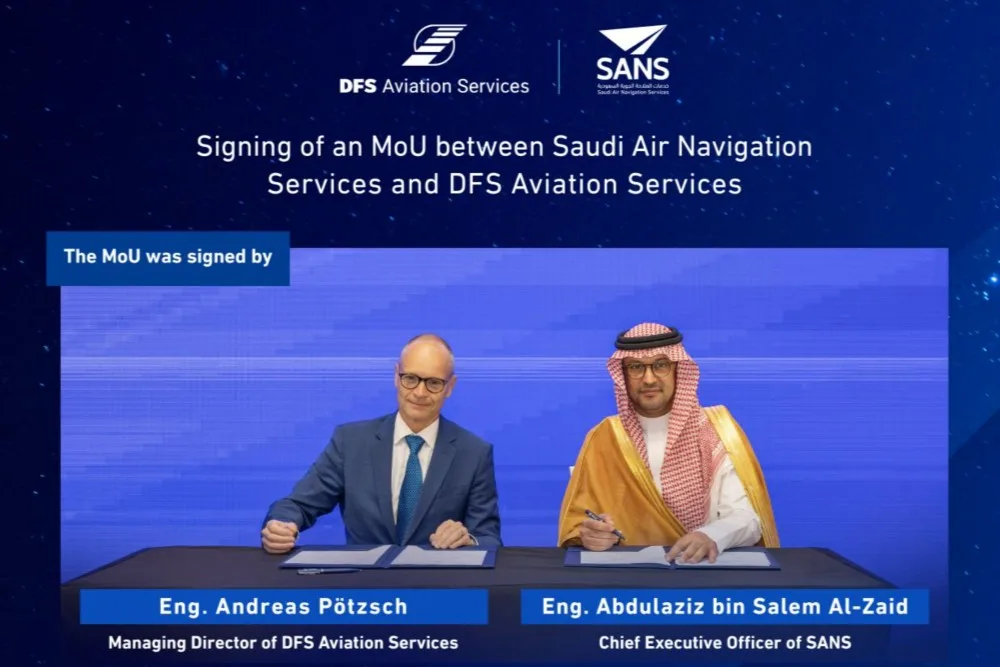
Welcome to a pivotal moment in modern aviation history, where collaboration meets technological evolution. As air traffic volumes continue to surge worldwide, aviation stakeholders face unprecedented operational demands. Addressing these complex challenges requires visionary leadership, deep technical expertise, and seamless international cooperation. It is with great enthusiasm that we explore this new alliance, a development that promises to reshape how skies are managed and optimized for decades to come.
Driving Global Air Traffic Management Excellence
The aviation industry stands at a critical crossroad, balancing the imperative for sustainable growth with the necessity of maintaining immaculate safety standards. To navigate this transformation, air navigation service providers must embrace modern methodologies and robust operational frameworks. The newly formalized partnership between Saudi Air Navigation Services and its esteemed German counterpart creates a powerhouse of operational intelligence. By uniting their extensive expertise, both organizations are uniquely positioned to address the multifaceted challenges of contemporary airspace management.
Observers can explore deeper operational contexts by reviewing related industry advancements, such as the professional training insights at the DFS Aviation Services Academy, which highlight how foundational education supports modern air traffic transformations. This cooperation is not merely an agreement on paper; it is a dedicated commitment to raising the bar for global aviation performance, ensuring that future skies remain safe, efficient, and fully equipped to handle unprecedented traffic demands.
How SANS and DAS Are Revolutionizing Air Navigation
At the heart of this strategic alliance lies a shared vision for operational excellence and technological modernization. Saudi Air Navigation Services brings vital regional insights and operational mastery from one of the world’s most dynamic aviation regions, while DFS Aviation Services (DAS), accessible via the official portal of DFS Aviation Services, contributes decades of European regulatory and technical excellence. Together, they establish a comprehensive framework for long-term collaboration across multiple operational and technological pillars.
This synergy is designed to support the evolving needs of air navigation service providers worldwide, facilitating a smooth transition toward smarter, highly integrated skies. As Eng. Abdulaziz Al-Zaid, CEO at SANS, insightfully notes, this partnership creates vital new opportunities to advance innovation in air traffic management. Working hand in hand, the partners will explore advanced technologies and concepts that support the continuous evolution of air navigation services, seamlessly spanning from automation and digitalisation to future mobility solutions.
« This partnership creates new opportunities to advance innovation in air traffic management. Together with DFS Aviation Services, we will explore technologies and concepts that support the evolution of air navigation services, from automation and digitalisation to future mobility solutions”, says Eng. Abdulaziz Al-Zaid, CEO at SANS.
Such forward-thinking initiatives resonate deeply with broader industry trends, aligning closely with previous analyses on scalable air traffic management service models developed with Frequentis and DFS, which demonstrate how modular architectures drive operational resilience.
Accelerating Digital Transformation and Cloud Solutions
In today’s fast-paced digital economy, embracing technological change is no longer optional—it is a core survival requirement for critical infrastructure providers. The collaboration places heavy emphasis on accelerating digital transformation through sophisticated ATM system architecture and cloud-based services. Traditional air traffic management systems often suffer from legacy infrastructure limitations that restrict data sharing and scalability. By pivoting toward modern cloud-based frameworks and advanced automation tools, service providers can unlock unprecedented levels of data interoperability and system resilience.
Andreas Pötzsch, Managing Director at DAS, emphasizes that modern air navigation service providers face intensifying demands for efficiency and capacity. Through this partnership, both organizations successfully combine complementary strengths to explore innovative approaches that deliver tangible operational value on a global scale. This digital leap empowers controllers with real-time analytics, predictive traffic management tools, and enhanced situational awareness, ultimately reducing delays and optimizing fuel consumption for airlines flying across international routes.
« Air navigation service providers are facing increasing demands for efficiency, capacity and digital transformation. Through this partnership, we are bringing together complementary strengths to explore innovative approaches that deliver tangible operational value », says Andreas Pötzsch, Managing Director at DAS.
Pioneering Remote Towers and Advanced Mobility
Beyond traditional airspace management enhancements, the partnership boldly ventures into the frontier of emerging aviation concepts, including remote tower technology and Advanced Air Mobility (AAM). Remote digital towers are fundamentally transforming how smaller and mid-sized airports manage air traffic, offering cost-effective, highly reliable, and flexible alternatives to conventional control towers. Industry professionals can gain valuable perspective on these deployments by examining the innovative remote tower deployments by DFS Aviation Services in Albania, which showcase the practical viability and economic efficiency of remote digital solutions. Furthermore, as vertical takeoff and landing aircraft and autonomous drones prepare to integrate into mainstream urban and regional airspace, pioneering frameworks developed by this partnership will ensure safe, orderly integration. Airspace optimisation and air traffic flow management will benefit immensely from these shared technological capabilities, empowering service providers to accommodate new classes of airspace users without compromising safety or throughput.
Strengthening Global Aviation Safety Standards
Safety remains the undisputed cornerstone of every aviation initiative, guiding every technological upgrade and operational adjustment. The partnership is intentionally structured to facilitate continuous knowledge exchange and technology transfer between both organisations. By pooling intellectual resources, safety data, and operational best practices, the alliance ensures that every deployed solution adheres to the highest international safety standards. This mutual exchange creates accelerated pathways for innovation while maintaining rigorous risk-mitigation protocols. Air navigation service providers worldwide stand to gain direct operational benefits, drawing from a rich repository of shared wisdom and tested methodologies. Whether it involves optimizing complex arrival routes or implementing automated flow management systems, the collaborative approach guarantees that safety margins are continuously expanded rather than compromised.
Frequently Asked Questions (FAQ)
The primary objective of this strategic partnership is to enhance the operational efficiency, capacity, and future readiness of global air navigation services. By combining their expertise, both organizations aim to accelerate digital transformation, optimize airspace management, and successfully deploy innovative ATM solutions worldwide.
The partnership places strong emphasis on exploring cutting-edge technologies and concepts, including advanced air traffic management system architecture, cloud-based services, automation, air traffic flow management, remote digital towers, and Advanced Air Mobility solutions.
This collaboration facilitates vital knowledge exchange and technology transfer between the participating organizations. Consequently, air navigation service providers worldwide gain access to proven operational methodologies, enhanced sustainability practices, and innovative tools that deliver tangible operational value.
Conclusion: A New Era for Air Navigation Services
In summary, the strategic partnership between SANS and DFS Aviation Services represents a watershed moment for the global aviation community. By harmonizing technological capabilities, operational insights, and a shared dedication to excellence, the alliance is well-equipped to guide air navigation service providers through an era of profound transformation. From cloud-based architectures and digital remote towers to advanced air traffic flow management, the roadmap ahead is both ambitious and inspiring. As these initiatives unfold, they promise to deliver enduring operational value, enhanced sustainability, and safer skies for everyone involved in aviation.
We would love to hear your thoughts on this exciting international collaboration! How do you envision remote towers and cloud-based ATM systems transforming regional air traffic management in the coming years? Please share your insights, questions, or professional perspectives in the comments section below.