

Eve Air Mobility arrives at the 2026 Farnborough International Airshow as a defining force in the aviation sector, demonstrating clear progress toward certification and commercial readiness.
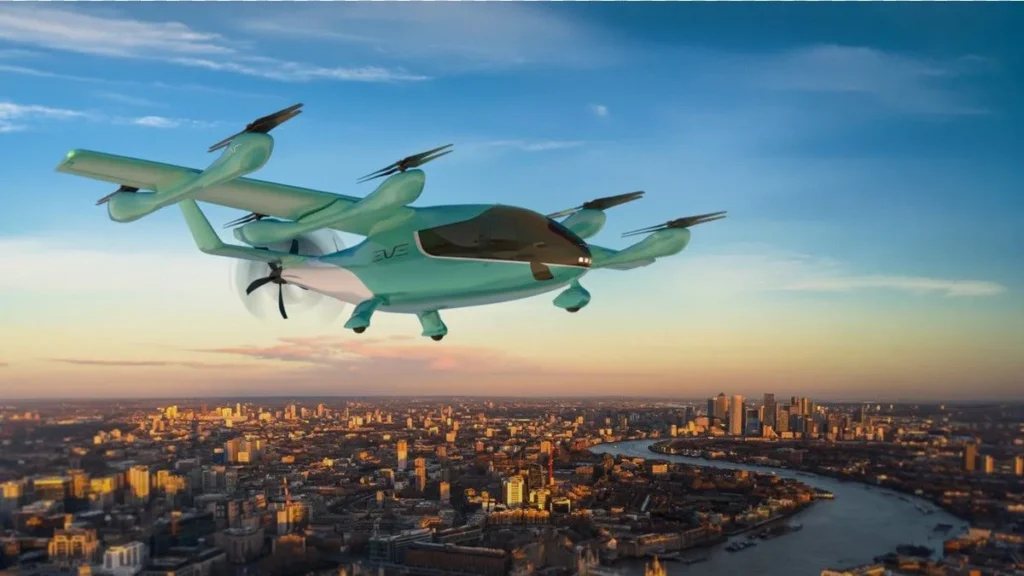
The aviation industry has descended upon Hampshire for the much-anticipated Farnborough International Airshow 2026. Among the sprawling exhibits and flight demonstrations, one name stands out for its tangible momentum: Eve Air Mobility. As the industry shifts its gaze from conceptual designs to the reality of electric flight, the company is proving that it is not just participating in the conversation—it is leading the execution.
Walking through the exhibition halls, the atmosphere is electric. There is a palpable shift in tone this year, moving from speculative questions about « if » urban air mobility will happen to logistical questions about « how » it will scale. It is within this shift that the company’s presence at Pavilion D-030 becomes a focal point for investors, partners, and aviation enthusiasts alike.
The Evolution of Eve Air Mobility
Since its inception, the trajectory of the program has been defined by a disciplined, iterative approach. The company has moved decisively beyond the initial design phases and into the rigorous world of active flight testing. For those following the long-term industry trends, it is helpful to look back at the roots of this program; you can read our deep dive into the strategic Embraer partnership and technical synergy to understand how the company leverages decades of aerospace heritage to minimize risk.
The current phase is characterized by a rapid succession of milestones. With the first flight successfully completed in December 2025, the team has transitioned into a steady rhythm of testing. This is not merely about getting an aircraft into the air; it is about gathering the critical performance data required to satisfy international aviation authorities. By running dozens of test flights, the engineering team has refined the flight control laws and systems architecture, proving the maturity of the design with every takeoff and landing.
Embraer Synergy and Engineering Excellence
One cannot discuss the progress of this program without acknowledging the « Embraer factor. » With 56 years of aerospace expertise backing the project, the development cycle benefits from a culture of safety and precision that is rarely seen in startups. This institutional knowledge is the bedrock upon which the aircraft’s stability and reliability are built.
At Farnborough, this heritage is on full display. The full-scale eVTOL mock-up in the pavilion is not just a marketing tool; it is a testament to the manufacturing readiness that the team is currently preparing for. Production plans for six conforming prototypes are already in motion, marking a transition from experimental development to serial manufacturing processes. This is the bridge between a successful prototype and a commercially viable fleet.
Navigating the Certification Landscape
Certification is the true « make or break » milestone for any new aircraft. For the electric Vertical Take-Off and Landing (eVTOL) industry, the challenge involves meeting safety standards that are as rigorous as those for commercial airliners. The current flight test program is purposefully structured to reduce these risks.
After completing hover and low-speed testing, the program is advancing toward the next hurdle: wingborne cruise evaluation. This summer, partial transition flights have begun, with full transitions scheduled for later this year. These maneuvers are essential for validating lift and cruise efficiency. By de-risking these aerodynamic transitions early, the company provides operators with the confidence they need to integrate these aircraft into their future business models.
Beyond the Aircraft: TechCare and Vector
While the hardware often captures the headlines, the true scalability of urban air mobility lies in the ecosystem. Providing a safe, quiet, and efficient aircraft is only half the battle; the other half is the operational support that keeps the fleet in the air and the airspace organized.
The company is addressing this with a portfolio of solutions that simplify the user experience for operators. To understand how the company is tackling the complexity of flight paths, you can explore their advanced urban airspace integration via the Vector software. Meanwhile, TechCare acts as a guardian for fleet availability, providing predictable maintenance schedules that are essential for high-frequency urban operations. These are not just add-ons—they are core components of the company’s entry-to-service strategy, designed to remove the « operational friction » that often plagues new aviation sectors.
Expanding Global Operations
Commercial momentum is the ultimate validator of any business strategy. The company has successfully cultivated the industry’s largest pipeline, with approximately 2,700 eVTOL pre-orders. What makes this number particularly impressive is the quality of the contracts; these are binding agreements that include pre-delivery payments.
Recent commitments from established players like Revo in Brazil and AirX in Japan signify a shift from speculative interest to tangible fleet expansion. These operators are not just buying vehicles; they are buying into an ecosystem that promises to electrify high-frequency urban travel. Whether it is last-mile mobility or sightseeing, the diversity of these orders proves that the aircraft’s design is versatile enough to meet different market demands. You can visit the official website for more information on the eVTOL ecosystem and see how their vision is expanding globally.
The Future of Urban Air Mobility
As we look toward the 2029 entry-to-service date, the progress shown at Farnborough 2026 suggests that the industry is hitting its stride. The combination of active flight data, a solid manufacturing plan, and a growing order book creates a compelling narrative for the future of transportation.
The next few years will be defined by the transition from testing to production. As the flight envelope expands to include full transitions and high-speed cruise, we can expect to see even more granular data emerging. For the aviation community, this is an exciting time to watch history in the making. The path to a more sustainable, efficient, and interconnected urban environment is becoming clearer with every flight.
Frequently Asked Questions (FAQ)
The program successfully completed its first flight in December 2025 and has since conducted dozens of test flights. It is now progressing toward full transition flight evaluations throughout 2026 to validate lift and cruise performance.
Vector is designed to enable the safe and efficient integration of eVTOLs into complex urban airspace. It helps manage air traffic flow, reduce operational barriers, and ensure that multiple aircraft can operate in the same urban corridors reliably.
The company has built a robust commercial pipeline with approximately 2,700 eVTOL pre-orders. These include binding agreements with established helicopter operators like Revo and AirX, supported by pre-delivery payments.
Join the Conversation
The aviation sector is evolving faster than ever, and the developments at Farnborough 2026 highlight just how close we are to a new era of urban transport. What are your thoughts on the transition from traditional aviation to electric flight? Do you believe that eVTOLs will realistically change how we commute within the next five years? Share your insights and perspectives in the comments section below!