

If you’ve been following the aviation industry, you know that summer is peak season for air travel. The latest traffic figures from Fraport for July 2025 paint a clear picture of this global demand, revealing some surprising trends. While Frankfurt Airport (FRA) saw a modest increase, it was Fraport’s international portfolio that truly took flight, with several key airports experiencing exceptional growth. This article delves deep into these numbers, offering a comprehensive analysis of the factors driving these shifts and what they mean for the future of global aviation. We’ll break down the data from Frankfurt, examine the remarkable performance of airports in Brazil and Slovenia, and look at the broader trends across Fraport’s network.
Frankfurt Airport (FRA) Navigates a Crowded Sky with Steady Growth
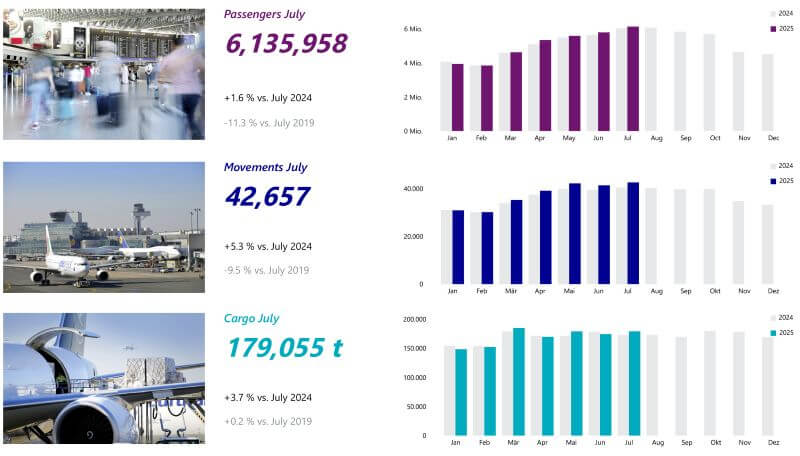
In July 2025, Frankfurt Airport (FRA) welcomed 6.1 million travelers, a respectable increase of 1.6% compared to the same month in 2024. While this growth is positive, it signals a period of stabilization for FRA, a major hub known for its massive scale. The demand for European leisure destinations, such as Greece, Italy, and Spain, was a key driver of this traffic. These perennial favorites continue to attract holidaymakers from across the globe, highlighting the enduring appeal of Southern European getaways.
Additionally, intercontinental routes to destinations in Thailand and East Africa saw a significant boost in demand, indicating a diversification of travel interests. This suggests that travelers are increasingly looking for unique and adventurous experiences beyond the traditional tourist hotspots. This trend is a crucial insight for airlines and travel companies aiming to cater to evolving consumer preferences. The numbers weren’t just about passengers. Cargo volumes at FRA also climbed, increasing by 3.7% to 179,055 metric tons. This growth in cargo, coupled with a 5.3% rise in takeoffs and landings to 42,657, underscores the airport’s multifaceted role as a vital logistics hub, not just a passenger gateway. The total maximum takeoff weights (MTOWs) also rose by 2.3% to around 2.6 million metric tons, further confirming the airport’s robust operational activity.
International Airports Steal the Spotlight with Record-Breaking Figures
While Frankfurt’s performance was solid, the true story of July 2025 lies in the phenomenal growth of Fraport’s international airports. This is where the data becomes truly compelling, showing a dynamic and rapidly expanding global network.
Slovenia’s Ljubljana Airport (LJU) soared, with traffic rising by a remarkable 12.2% to 181,599 passengers. This significant increase highlights the growing popularity of Slovenia as a destination, a trend likely driven by its stunning natural beauty and emerging tourism scene. It’s a prime example of how smaller, regional airports can achieve explosive growth when they tap into a burgeoning market. The most dramatic growth story, however, comes from Brazil. Fraport’s two Brazilian airports, Fortaleza (FOR) and Porto Alegre (POA), witnessed an astonishing increase of 96.9%, reaching a total of 1.3 million passengers. This figure is particularly striking due to a unique circumstance. In July 2024, the region around Porto Alegre was hit by massive floods, which severely impacted traffic and led to the airport’s closure for several months. The July 2025 numbers, therefore, represent a powerful rebound and a return to normalcy, demonstrating the resilience of air travel in the face of natural disasters.
Peru’s Lima Airport (LIM) also contributed to the growth story, experiencing a 5.4% increase to around 2.3 million passengers. This steady rise reflects the airport’s status as a key hub for travel within South America and beyond. The consistent growth at LIM shows the strength of the Peruvian market and its importance in the region’s aviation landscape.
Greece and Bulgaria Remain Sunny Destinations for Travelers
Fraport’s 14 Greek airports, a cornerstone of its international portfolio, hosted a total of 6.6 million passengers. This represents a solid 2.4% increase, reaffirming the country’s position as a top European holiday destination. Despite a crowded market, Greece continues to attract millions, with its islands and historical sites offering an unmatched travel experience.
In Bulgaria, the two coastal airports of Burgas (BOJ) and Varna (VAR) welcomed 828,538 passengers, a healthy 4.0% increase. This growth points to the rising popularity of Bulgaria’s Black Sea coast as an affordable and attractive alternative to more expensive European destinations.
Notably, traffic at Antalya Airport on the Turkish Riviera largely remained stable at around 5.6 million passengers, with a minor decrease of 0.4%. This stability, despite regional competition, speaks to the sustained appeal of the Turkish Riviera as a world-class tourist destination.
Global Trends and the Total Impact on Fraport’s Network
The cumulative effect of these individual airport performances is significant. The total number of passengers across all airports actively managed by Fraport increased by 4.6% year-on-year, reaching approximately 22.9 million in July 2025. This impressive figure tells a compelling story of a company with a diverse and robust network, capable of adapting to varying market conditions and capitalizing on global travel trends. The data from July 2025 highlights a crucial shift: while major hubs like Frankfurt remain essential, the real momentum and growth are occurring in Fraport’s international portfolio. This diversification is a strategic advantage, as it reduces reliance on a single market and allows the company to tap into emerging travel hotspots around the world. It shows that the future of aviation is not just about the largest hubs, but about a connected network of airports that can capture and channel the dynamic flow of global travelers.
The more rapid growth at Fraport’s international airports can be attributed to several factors. Strong demand for leisure destinations in Greece and Bulgaria was a key driver. Additionally, unique situations, such as the full recovery of traffic at Porto Alegre following last year’s floods, led to a dramatic surge in passenger numbers compared to the previous year.
Cargo traffic is a vital indicator of Frankfurt Airport’s economic health. In July 2025, cargo volumes increased by 3.7%, confirming FRA’s status as a crucial logistics hub. This growth in freight complements passenger operations, providing overall operational stability for the airport.
Fraport’s data shows that while travelers continue to favor classic European leisure destinations, there is also a growing demand for less conventional intercontinental routes, such as those to Thailand and East Africa. This diversification indicates a dynamic and adaptable travel market that is constantly evolving to meet new interests.
Conclusion: What Do These Numbers Mean for You?
So, what do these traffic figures mean for you, the traveler? They show a vibrant and dynamic industry that is constantly evolving to meet your travel desires. The growth in destinations like Brazil and Slovenia means more options and potentially more competitive prices for you. It also means that airports are investing in infrastructure and services to handle this increasing demand, leading to a better travel experience for everyone. The data is a reflection of your choices and preferences, a direct result of where you choose to fly.
The next time you book a flight, remember that you are part of a massive global network. These numbers are more than just statistics; they are a testament to our shared love of exploration and connection.
What are your thoughts on these trends? Have you noticed a change in travel patterns or airport experiences? We invite you to share your insights and join the conversation in the comments below!