Close Menu
AerobernieAerobernie
    Facebook X (Twitter) Instagram Pinterest YouTube Tumblr LinkedIn RSS
    Sur toutes les fréquences
    • Malaysia Aviation Group renforce sa flotte avec 10 Boeing 787 Dreamliner
    • Aéroports au féminin : huit plateformes s’engagent pour révéler les métiers de l’aérien
    • Aéroport Grenoble Alpes Isère : Edeis et le Département inaugurent une nouvelle ère jusqu’en 2037
    • Korean Air conserve ses 5 étoiles APEX pour la 10ᵉ année consécutive
    • Ariane 6 : 9e mission commerciale et 36 satellites Amazon Leo
    • Afterwork à l’Aéroport Brest Bretagne : franc succès pour le cap sur Séville
    • Route du Rhum 2026 : Air Caraïbes unit exploit sportif et solidarité en Guadeloupe
    • Adriatic-Ionian Air Traffic Management: Ten Nations Unite in Rome
    jeudi 26 novembre 2026
    Aerobernie Journal Web Logo
    AerobernieAerobernie
    Facebook X (Twitter) Instagram LinkedIn RSS
    • Actualités
      • Bibliothèque
      • Industrie Aéronautique
    • Aéroports
      1ère édition d'Aéroports au féminin – Aérométiers

      Aéroports au féminin : huit plateformes s’engagent pour révéler les métiers de l’aérien

      24 novembre 2026
      Inauguration de la reprise d'exploitation de l'aéroport Grenoble Alpes Isère par Edeis et le Département. ©Edeis

      Aéroport Grenoble Alpes Isère : Edeis et le Département inaugurent une nouvelle ère jusqu’en 2037

      23 novembre 2026
      Afterwork cap sur Séville à l'aéroport Brest Bretagne

      Afterwork à l’Aéroport Brest Bretagne : franc succès pour le cap sur Séville

      21 novembre 2026
      Inclusion et handicap : l’Aéroport Toulouse-Blagnac passe à l’action pour ses collaborateurs

      Emploi handicap aéroport Toulouse-Blagnac : ATB passe aux actes

      20 novembre 2026
      Vue de la tour de contrôle de l'aéroport du Luxembourg

      L’aéroport du Luxembourg rejoint Aéro Biodiversité : cap sur l’Europe

      17 novembre 2026
    • Trafic Aérien (ATM)
      Igor De Biasio, CEO and General Manager of ENAV – EUSAIR Conference Connected Skies in Rome

      Adriatic-Ionian Air Traffic Management: Ten Nations Unite in Rome

      21 novembre 2026
      iew of the runway and air traffic control tower at Zayed International Airport in Abu Dhabi

      Zayed International Airport Chooses Frequentis VCS3020X for Safer Skies

      18 novembre 2026
      Controm tower vienna airport austria

      GuardX: How Next-Generation Recording Solutions Elevate Air Traffic Safety

      29 octobre 2026
      Eng. Abdulaziz Al-Zaid, CEO at SANS, and Andreas Poetzsch, Managing Director at DAS, at the signing of the MoU / DFS Aviation Services

      SANS and DFS Aviation Services Establish Strategic Partnership to Advance Air Navigation Services

      20 septembre 2026
      Global Air Traffic Management

      Global Air Traffic Management: Orchestrating Continuous Transformation in Our Skies

      13 septembre 2026
    • Drones & Mobilités
      1. UAV & Drones Pros
      2. Mobilité Aérienne Urbaine
      3. eVTOL
      4. View All
      Frequentis Powers Australia's Digital UTM Services for Safe Drone Operations

      Australia’s Digital UTM Powers Safe Drone Growth Down Under

      19 novembre 2026
      DJI Dock 4

      DJI Dock 4 : la révolution du soutien aérien continu par drone

      19 octobre 2026
      HERCULES 100 ©DRONE VOLT

      HERCULES 100 : DRONE VOLT dévoile son drone cargo français de 100 kg de charge utile

      9 octobre 2026
      Drone Volt

      DRONE VOLT signe un accord majeur avec Tonner Drones autour d’Azur Drones

      31 août 2026
      Malaysia Aviation Group commande 10 Boeing 787 Dreamliner

      Malaysia Aviation Group renforce sa flotte avec 10 Boeing 787 Dreamliner

      25 novembre 2026
      1ère édition d'Aéroports au féminin – Aérométiers

      Aéroports au féminin : huit plateformes s’engagent pour révéler les métiers de l’aérien

      24 novembre 2026
      Inauguration de la reprise d'exploitation de l'aéroport Grenoble Alpes Isère par Edeis et le Département. ©Edeis

      Aéroport Grenoble Alpes Isère : Edeis et le Département inaugurent une nouvelle ère jusqu’en 2037

      23 novembre 2026
      Korean Air conserve ses cinq étoiles APEX pour la 10e année consécutive

      Korean Air conserve ses 5 étoiles APEX pour la 10ᵉ année consécutive

      22 novembre 2026
      Introducing Halo: Archer’s Commercial Variant of Dual-Use Autonomous VTOL Aircraft Platform Developed With Anduril

      Archer Halo Unveiled: The Future of Autonomous VTOL

      22 juillet 2026
      Eve Air Mobility

      Eve Air Mobility Takes Center Stage at Farnborough 2026

      16 juillet 2026

      Thales to Build Singapore’s Drone Traffic Management Platform

      26 mai 2026
      Vertical Aerospace Selects Evolito as Electric Engine Partner for Valo

      Evolito to Power Vertical Aerospace’s Valo eVTOL Commercial Flight

      9 février 2026
    • Compagnies Aériennes
      Malaysia Aviation Group commande 10 Boeing 787 Dreamliner

      Malaysia Aviation Group renforce sa flotte avec 10 Boeing 787 Dreamliner

      25 novembre 2026
      Korean Air conserve ses cinq étoiles APEX pour la 10e année consécutive

      Korean Air conserve ses 5 étoiles APEX pour la 10ᵉ année consécutive

      22 novembre 2026
      IMOCA Groupe Dubreuil - Air Caraïbes - Route du Rhum 2026 © POLARYSE - Julien Champolion

      Route du Rhum 2026 : Air Caraïbes unit exploit sportif et solidarité en Guadeloupe

      21 novembre 2026
      Service gastronomique à bord de la cabine Business Hibiscus d'Aircalin

      Aircalin invite la gastronomie en classe Business Hibiscus pour les fêtes et 2027

      18 novembre 2026
      Photographie d'un Airbus A320neo de la flotte KM Malta Airlines

      Cap sur la Méditerranée : KM Malta Airlines ouvre une ligne directe entre Bordeaux et Malte

      15 novembre 2026
    • Voyage
      Ostrava Tchéquie

      Ostrava : la destination tchèque qui transforme son passé industriel en expérience touristique unique

      6 novembre 2026
      avion en pleine traversée de zone nuageuse

      Fofly : la première application qui prédit les turbulences en avion avant le décollage

      4 novembre 2026
      Plage urbaine de Barcelone

      Pont du 11 novembre : cinq jours pour changer d’air avec Vueling

      3 novembre 2026
      Centrale géothermique de Hellisheiði @Visit South Iceland

      Islande : quand la chaleur de la Terre façonne le quotidien

      30 octobre 2026
      plage de sable à Algarve au Portugal

      TAP Air Portugal : 5 escapades pour prolonger l’été au Portugal

      20 octobre 2026
    • Carrières
      • Emploi & Recrutement
      • Formations Aéro
    • Contact
    AerobernieAerobernie
    The Pilot Shortage Paradox: Why Many Cadets Still Struggle to Get Their First Airline Job

    The Pilot Shortage Paradox: Why Many Cadets Still Struggle to Get Their First Airline Job

    BernieBy Bernie21 août 2026 Emploi Aucun commentaire7 Mins Read
    Facebook Twitter LinkedIn Email

    The Pilot Shortage Paradox reveals a surprising reality in aviation: while massive pilot deficits are predicted for the coming decades, newly qualified cadets still face intense competition for entry-level roles.
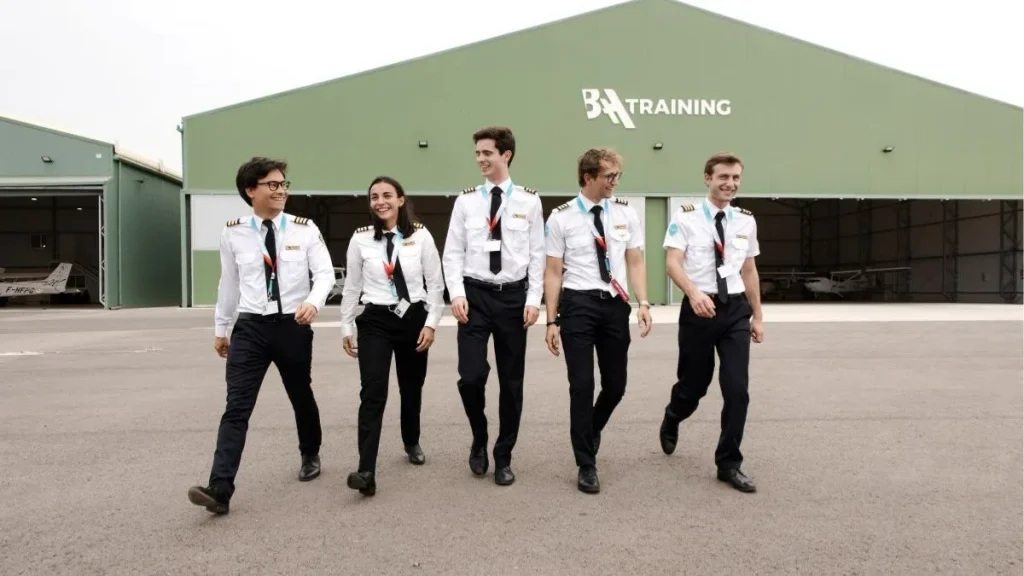
    Pilot Shortage Paradox: Why Cadets Struggle For Jobs
    Luxair-Graduation-BAA Training

    Stepping into the professional aviation world is supposed to be the culmination of years of hard work, financial investment, and dedication. Year after year, major aerospace reports—such as Boeing’s forecast predicting that commercial aviation will require 674,000 new pilots over the next twenty years—paint a picture of an industry desperately craving fresh talent. Driven by relentless fleet growth and natural workforce attrition, the horizon looks bright for anyone holding a Commercial Pilot Licence (CPL).

    Yet, if you speak to recent graduates, the ground reality feels strikingly different. Competition for entry-level First Officer positions remains fierce, leaving many talented young aviators wondering if the promised boom is a myth. So why are airlines struggling to find crew members while aspiring pilots struggle to find employment? The answer requires a deep dive into the true nature of modern aviation hiring.

    Understanding the Realities of the Pilot Shortage Paradox

    When people hear about a shortage, they often imagine a uniform, industry-wide scramble for talent where any qualified applicant can easily walk into a cockpit. However, the commercial aviation ecosystem is far more complex. It is actually composed of multiple distinct labour markets, each governed by its own operational needs, economic pressures, fleet strategies, and hiring criteria.

    According to Julius Norkunas, CEO of aviation recruitment platform AviationCV, the supply of newly trained pilots and current airline demand are currently out of sync. Flight academies continue producing cadets at a steady, predictable pace, but airline demand has not increased in parallel lockstep. External pressures, such as aircraft delivery delays, mean that airline fleets are simply not growing as fast as originally planned. Meanwhile, fluctuating fuel prices have occasionally forced carriers to temporarily park aircraft, allowing them to manage their schedules comfortably with existing senior staff.

    “Holding a CPL isn’t enough anymore. Airlines – particularly low-cost carriers in Europe – increasingly prefer candidates with additional qualifications such as the Airline Pilot Standards Multi-Crew Cooperation Course (APS MCC). It develops the technical and non-technical skills expected of today’s pilots,”

    – Stian Skaar, Head of Training at BAA Training

    Stian Skaar, Head of Training at BAA Training

    Why Industry Supply and Demand Remain Out of Sync

    The tension between training pipelines and real-world airline operations is vividly illustrated by recent aerospace data. According to IATA’s outlook, aircraft deliveries fell approximately 5,600 aircraft below the pre-pandemic trajectory, while the global order backlog surged to an impressive 18,100 aircraft—representing nearly 60% of the active global fleet.

    These severe manufacturing and supply chain constraints inevitably postpone the recruitment waves and advanced training programs that airlines originally intended to support fleet expansion. When carriers do finally open recruitment windows, strict safety regulations and insurance mandates often lead them to prioritize experienced captains and senior First Officers over low-hour, newly qualified cadets. Experienced aviators require significantly less initial ground school and simulator investment. As Norkunas notes, long-term shortage forecasts are entirely real, but they describe the overarching needs of the next two decades rather than today’s competitive job market for low-hour pilots.

    Global Variations and Regional Recruitment Shifts

    Pilot demand is never static; it shifts dynamically across different geographical regions as airlines react to geopolitical events and macroeconomic fluctuations. Overall, regional demand maintains a certain balance, but recent global developments have created noticeable turbulence in hiring flows.

    For instance, the geopolitical crisis in the Middle East temporarily put recruitment among major Gulf carriers on pause for several months. Fortunately, that region is now recovering robustly as carriers resume expansion and aggressively work to attract flight deck talent once again. At the same time, this temporary uncertainty pushed several expat pilots back into Europe, thereby increasing the local supply of available labour and intensifying competition for regional European jobs. Understanding these shifting geopolitical tides is crucial for any cadet planning where to cast their net.

    The Rising Demand for Widebody and Specific Aircraft Types

    Beyond geography, the specific aircraft type you are qualified to fly plays a massive role in your employability. Current industry data highlights robust demand for both First Officers and Captains on popular single-aisle aircraft like the Airbus A320 family and the Boeing 737.

    However, the most explosive and clear-cut growth trend is centered firmly within the widebody market. Leading international carriers are aggressively restructuring and building their future fleets around state-of-the-art aircraft such as the Boeing 787 Dreamliner and the Boeing 777. With these new widebody jets arriving, airlines are locked in fierce competition to poach experienced crew members from legacy European and Asian carriers. Consequently, the greatest market mismatch today is not found in overall raw numbers, but rather in experience levels and type qualifications. Demand consistently outpaces supply for highly skilled, type-rated widebody pilots, and that specialized gap is projected to widen significantly.

    Beyond Basic Licences: What Airlines Actually Look For

    Meeting minimum regulatory standards forms the mandatory foundation of any professional aviation career, but securing that elusive first airline job demands much more than pure technical flying proficiency. Modern airlines evaluate candidates holistically. Successful applicants must master simulator assessments, navigate rigorous behavioural interviews, demonstrate flawless Crew Resource Management (CRM), display sharp decision-making capabilities, and exhibit exceptional communication skills.

    According to Stian Skaar, Head of Training at BAA Training, having a strong CV on paper is no longer a guarantee of success. Holding a standard CPL is simply the entry ticket. Low-cost carriers and major airlines across Europe increasingly prefer candidates who have invested in advanced airline preparation programs at BAA Training to refine their multi-crew competencies before applying.

    How Aspiring First Officers Can Stand Out Effectively

    Bridging the gap between a freshly minted licence and a thriving commercial cockpit career requires proactive preparation. Specialized, airline-oriented training courses expose CPL holders to genuine airline standard operating procedures, realistic high-pressure simulator scenarios, and advanced CRM long before they face a formal airline interview panel.

    When exploring your options, reading our comprehensive commercial pilot training guides can provide invaluable insights into educational pathways and interview strategies. At forward-thinking academies, the training philosophy goes far beyond helping cadets pass initial checkrides. The primary objective is to prepare aspiring aviators to excel in airline recruitment processes, transition with absolute confidence into commercial flight operations, and uphold the highest standards of global aviation safety.

    Frequently Asked Questions (FAQ) on pilot shortage paradox

    What causes the pilot shortage paradox for new cadets?

    The paradox exists because long-term shortage predictions contrast with short-term constraints like manufacturing delivery delays and airline preferences for experienced pilots over low-hour graduates.

    How can a cadet stand out during airline interviews?

    Cadets can stand out by completing advanced multi-crew cooperation courses, mastering behavioural interview techniques, and refining their Crew Resource

    Are certain aircraft types in higher demand than others?

    Yes, while single-aisle aircraft remain stable, the highest demand is concentrated in the widebody market for modern aircraft like the Boeing 787 and 777.

    Conclusion: Navigating the Modern Aviation Job Market

    The situation facing young pilots is not an insurmountable roadblock, but rather a reflection of timing, economic realities, and specialized qualification standards. While long-term projections guarantee massive future demand across commercial aviation, daily hiring decisions are shaped by immediate fleet requirements, regional developments, and the ready availability of seasoned flight crew.

    Waiting passively for predicted shortages to automatically translate into job offers is an ineffective strategy. Earning a commercial licence opens the door, but ambitious candidates must actively research market demand, master airline selection protocols, and continuously develop both technical and non-technical proficiencies.

    What are your thoughts on landing your first airline job? Leave a comment below and share your personal experiences or questions!


    Chronique
    Faites décoller la nouvelle Facebook Twitter LinkedIn Email
    Previous ArticleJordanie : La réserve marine d’Aqaba au patrimoine mondial de l’UNESCO
    Next Article Arequipa et la vallée du Colca : 3 expériences incontournables pour une escapade bien-être d’exception
    Bernie
    • Website
    • Facebook
    • X (Twitter)
    • Instagram
    • LinkedIn

    Expert en navigation aérienne et gestion du trafic (ATM) avec plus de 40 ans d'expérience, Bernie est diplômé de l'ENAC et fondateur du journal Aerobernie (Promotion OCCA 80B). Ancien Ingénieur du Contrôle de la Navigation Aérienne (ICNA) à Lyon-Satolas et au CRNA-Est, il a poursuivi sa carrière à l'ENAC et à la DTI. Son expertise l'a mené à réaliser de nombreuses missions de conseil international (Afrique, Moyen-Orient, Chine). Fondateur de Aerobernie, éditeur et chroniqueur aéronautique depuis plus de 10 ans, il décrypte aujourd'hui sur Aerobernie les enjeux du secteur : des infrastructures mondiales aux mobilités innovantes (eVTOL, drones).

    Le meilleur du tarmac

    1ère édition d'Aéroports au féminin – Aérométiers

    Aéroports au féminin : huit plateformes s’engagent pour révéler les métiers de l’aérien

    Aéroports 24 novembre 2026
    Préparation de la coiffe Ariane 6 pour la 9e mission commerciale VA271 avec 36 satellites Amazon Leo

    Ariane 6 : 9e mission commerciale et 36 satellites Amazon Leo

    Espace 22 novembre 2026
    Afterwork cap sur Séville à l'aéroport Brest Bretagne

    Afterwork à l’Aéroport Brest Bretagne : franc succès pour le cap sur Séville

    Aéroports 21 novembre 2026
    Campagne de recrutement Air France

    Recrutement Air France : 1 200 postes en CDI à pourvoir dans la maintenance

    Emploi 16 novembre 2026
    Photographie d'un Airbus A320neo de la flotte KM Malta Airlines

    Cap sur la Méditerranée : KM Malta Airlines ouvre une ligne directe entre Bordeaux et Malte

    Compagnies Aériennes 15 novembre 2026
    Avions de combat légendaires : le nouveau livre de Frédéric Lert

    Plongée au cœur des avions de combat légendaires avec Frédéric Lert

    Bibliothèque 8 novembre 2026
    Contactez la tour de contrôle Cancel Reply

    Radar de Bord
    Tableau de Bord
    • Fréquence ATM
    • Escale
    • Cap sur l’emploi
    • Salle de briefing
    • Coulisses de l’industrie
    • Escale lecture
    En Direct du Tarmac
    Malaysia Aviation Group commande 10 Boeing 787 Dreamliner
    Malaysia Aviation Group renforce sa flotte avec 10 Boeing 787 Dreamliner
    25 novembre 2026
    1ère édition d'Aéroports au féminin – Aérométiers
    Aéroports au féminin : huit plateformes s’engagent pour révéler les métiers de l’aérien
    24 novembre 2026
    Inauguration de la reprise d'exploitation de l'aéroport Grenoble Alpes Isère par Edeis et le Département. ©Edeis
    Aéroport Grenoble Alpes Isère : Edeis et le Département inaugurent une nouvelle ère jusqu’en 2037
    23 novembre 2026
    Korean Air conserve ses cinq étoiles APEX pour la 10e année consécutive
    Korean Air conserve ses 5 étoiles APEX pour la 10ᵉ année consécutive
    22 novembre 2026
    Préparation de la coiffe Ariane 6 pour la 9e mission commerciale VA271 avec 36 satellites Amazon Leo
    Ariane 6 : 9e mission commerciale et 36 satellites Amazon Leo
    22 novembre 2026
    Abonnez-vous

    Saisissez votre adresse e-mail pour vous abonner à ce blog et recevoir une notification de chaque nouvel article par e-mail.

    Rejoignez l’Équipage
    • LinkedIn
    • Facebook
    • X
    • Instagram

    Bernieshoot — voyage, gastronomie & photographie


    Rainfolk — blog littéraire
     

    Facebook X (Twitter) Instagram Pinterest LinkedIn RSS
    • A propos
    • Mentions Légales
    • Politique de confidentialité
    • Nos Services
    • Nos Partenaires
    • Contact
    © 2026 Créé par et pour Aerobernie.com

    Tapez votre recherche ci-dessus et faîtes Entrée. Tapez Echap pour annuler.