
Zayed International Airport is upgrading its air traffic voice communications: 129 positions, two independent platforms and stronger cyber protection.
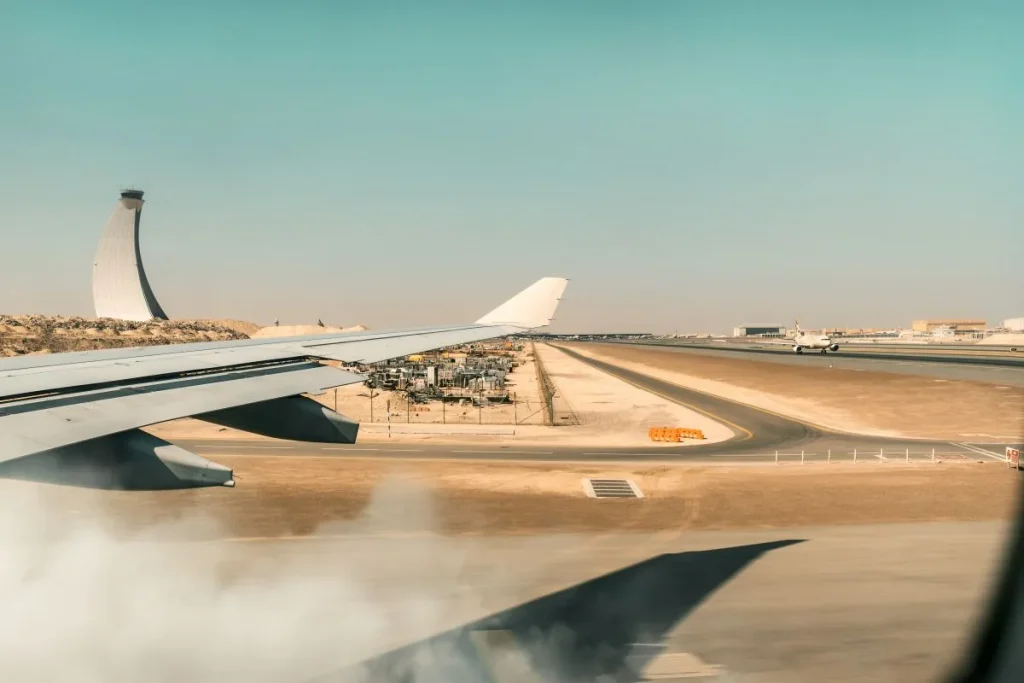
Zayed International Airport is entering a new era of secure air traffic control, and I find it a fascinating story. It has selected the Frequentis VCS3020X voice communication system for its Next Generation ATM System programme.
Behind this technical choice lies a simple question. What happens when the link between a controller and a pilot is disrupted? In aviation, the answer must always be: nothing. You can see why this project deserves our attention.
Personally, having followed air traffic management closely for years, I am always struck by how much safety rests on a single element: clear, instant, uninterrupted voice.
Why Voice Communication Remains the Heart of Air Traffic Control
Radar screens, data links and digital tools are everywhere in modern control rooms. Yet the voice link between controller and pilot remains the foundation of daily operations.
It is the channel through which clearances are given, instructions are confirmed and unexpected situations are handled in real time. When it works, nobody notices it. When it fails, everything stops.
That is why voice communication systems are classed as safety-critical. They must be available at every moment, under every condition, for every controller.
A Major Gateway Between Europe, Asia and Africa
Abu Dhabi’s main airport sits at a crossroads. It connects air traffic flows between Europe, Asia and Africa, which makes it a strategic hub on the global map.
A hub of this kind cannot afford approximations. Each delay ripples across networks, airlines and passengers thousands of kilometres away. Reliable communication is therefore not a luxury here. It is a condition of safe and efficient operations.
This explains why the airport has made voice communication a central pillar of its modernisation.
129 Working Positions Supporting Tower and Approach Teams
The new system will serve the tower and approach teams across 129 working positions. That is a considerable scale, and every position counts.
Each controller needs a system that responds instantly, stays stable and remains intuitive during peak traffic. Deploying it consistently across so many positions also helps harmonise working conditions for teams.
Frequentis will deliver the project end to end. That includes training and commissioning, followed by warranty support. For operational teams, this continuity matters as much as the technology itself, because a well-trained controller is a confident controller.
Two Independent Platforms to Guarantee Operational Continuity
The heart of the design is a dual architecture. The airport will rely on fully independent main and contingency platforms.
The principle is easy to grasp. If one platform meets a problem, the other can take over, and the risk of service disruption is minimised. This is the same logic that guides many critical air traffic management projects.
I explored a comparable approach in how Brest Area Control Centre modernises its voice communication with Frequentis. The lesson is the same everywhere: availability is built in from the design stage, not added afterwards.
Cyber Security: Protecting Communications as Much as Keeping Them Available
Here is a point I find essential. As aviation infrastructure becomes more complex, protecting communication systems matters as much as keeping them available.
A system that works but can be compromised is not truly reliable. The VCS3020X is therefore secured against cyber threats. The goal is to give controllers secure, uninterrupted communications, even in the most demanding operational scenarios.
This dual-platform approach strengthens both resilience and cyber security across Abu Dhabi’s air traffic control operations. It is also consistent with the wider digital shift in the sector, as I described when covering Estonia’s digital NOTAM services powered by Frequentis. The more digital aviation becomes, the more security by design becomes a priority.
Central Monitoring and Logging for Faster Investigations
Resilience is not only about preventing problems. It is also about understanding them quickly when they occur.
The system will include central monitoring and logging. Technical teams will be able to:
- observe system activity in real time;
- investigate operational activities and deviations;
- analyse unexpected events or incidents more efficiently.
This transparency is valuable for safety culture. A clear record of what happened helps teams learn, improve and reassure everyone involved. It turns a technical tool into a genuine continuous-improvement asset.
A Proven High-Performance VoIP Solution
Technology choice matters too. The VCS3020X is presented as one of the most proven and functionally comprehensive ATM voice communication systems worldwide. It combines high-performance VoIP technology with a strong focus on resilience.
If you want to explore the wider portfolio behind it, you can discover Frequentis air traffic management voice communication solutions directly on the manufacturer’s website.
In practice, VoIP offers flexibility and scalability for airports preparing their future. Combined with redundancy and cyber protection, it forms a solid base for the years ahead.
A New Regional Reference with Indra and Abu Dhabi Airports
The project is delivered in partnership with Indra, acting as prime contractor. It also expands the existing partnership with Abu Dhabi Airports through the deployment of a Frequentis voice communication system. At the same time, it establishes a new regional reference within the airport’s modernisation programme.
Reinhard Grimm, Executive Vice President Air Traffic Management at Frequentis, underlines that reliable and secure voice communications are fundamental to safe and continuous airport operations. The contract, he explains, confirms the trust placed in the company’s technology for complex and security-sensitive airport environments.
Continuity is a recurring theme across the industry. For another example of a resilience-first mindset, you may enjoy my article on the Frequentis backup ATM system deployed in Denmark. Different countries, same priority: never lose control of the airspace.
What This Project Means for Passengers and Controllers
Most passengers will never hear about voice communication systems. Yet they benefit from them every time they board a flight.
For controllers, the gain is confidence: confidence that their words will reach the aircraft, that the system is protected and that a backup is ready. For the airport, it is a stronger guarantee of smooth, safe operations. For passengers, it is simply a journey that goes as planned.
FAQ: Questions on Frequentis VCS3020X and Zayed International Airport
The VCS3020X is a voice communication system for air traffic control. It will support tower and approach teams across 129 working positions at Zayed International Airport. It uses VoIP technology and is built for high availability and cyber protection.
The system relies on two fully independent platforms: a main one and a contingency one. If the main platform fails, the contingency platform can take over. This minimises the risk of service disruption for air traffic controllers.
Voice links are safety-critical, so they must be both available and protected. Cyber security prevents threats from degrading or interrupting controller-pilot exchanges. It helps ensure secure, uninterrupted communications in every operational scenario.
Conclusion: Resilience and Security Hand in Hand
This project shows that modern air traffic control rests on two inseparable pillars: availability and protection. With 129 positions, two independent platforms, central monitoring and strong cyber security, Abu Dhabi is building a communication backbone designed for the long term.
Personally, I see it as a clear signal. In aviation, the most important technologies are often the ones you never notice, until the day they prove essential.
What do you think of this dual-platform approach to resilience and cyber security? Do you believe voice communication will remain central to air traffic control in the coming decades? Share your thoughts in the comments, I would love to read your views and continue the conversation with you.