

DSNA has officially reached Level 3 in CANSO’s GreenATM Environmental Accreditation Programme, marking a significant leap in sustainable air traffic management.
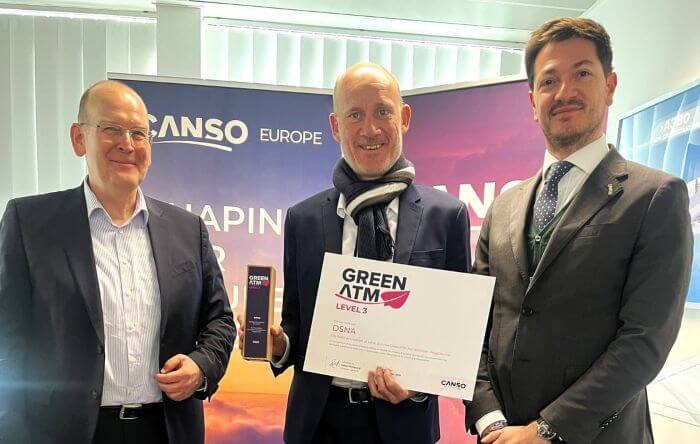
The French Air Navigation Service Provider (ANSP), DSNA, has demonstrated its unwavering commitment to the planet. By securing the Level 3 accreditation within the GreenATM Environmental Accreditation Programme, the organization proves that operational efficiency and ecological responsibility can go hand in hand. This achievement, announced just one year after reaching Level 2, highlights a rapid and successful transformation of French air traffic control practices.
A Major Milestone for Sustainable Aviation in France
The aviation industry is under intense scrutiny regarding its carbon footprint. In this context, the GreenATM Environmental Accreditation Programme provides a rigorous independent framework for ANSPs to evaluate and mitigate their environmental impact.
By reaching Level 3, DSNA joins an elite group of providers recognized for integrating sustainability into the heart of their daily operations. This isn’t just a badge of honor; it is a clear roadmap for reducing the ecological footprint of every flight crossing French skies.
What is the CANSO GreenATM Environmental Accreditation Programme?
Launched in 2022, this initiative by CANSO (Civil Air Navigation Services Organisation) offers a five-level certification process. Each stage requires increasingly ambitious standards for environmental stewardship. To understand the progression, you can look back at how ATNS achieved Level 2 in the CANSO GreenATM programme last year.
The program evaluates everything from office energy consumption to the complex management of airspace. For more details on the certification criteria, you can visit the official CANSO GreenATM website.
“It is impressive to see how, in just one year, DSNA has delivered so many improvements to progress from Level 2 to Level 3 accreditation under the CANSO GreenATM programme. It is a testament to their dedication to enhancing the environmental impact of their operations and their sustainable business practices. We congratulate them on this impressive achievement,” said Simon Hocquard, CANSO President & CEO.
How DSNA Accelerated its Environmental Transition
Moving from Level 2 to Level 3 in just twelve months is a remarkable feat. DSNA’s success is built on three main pillars that directly influence the efficiency of European aviation:
- Strategic Policy Development: The formal publishing of a comprehensive environmental plan that aligns all departments toward a common goal.
- Optimized Flight Profiles: Increasing the use of Continuous Descent Operations (CDO) and Continuous Climb Operations (CCO). These maneuvers allow aircraft to stay at fuel-efficient altitudes longer, significantly reducing fuel burn and noise pollution near airports.
- Staff Engagement: Empowering air traffic controllers and technicians to take ownership of environmental targets, ensuring that sustainability is a collective effort.
Leadership Perspectives on the GreenATM Success
Simon Hocquard, Director General of CANSO, expressed his admiration for the speed of DSNA’s progress. He noted that such dedication sets a powerful example for other ANSPs worldwide.
Frédéric Guignier, Director of French Air Navigation Services, emphasized that this Level 3 distinction rewards the tireless efforts of his teams. He stated that this progression confirms DSNA’s commitment to reducing CO2 emissions, lowering noise levels for local communities, and improving overall energy performance.
Frédéric Guignier, Director of French Air Navigation Services commented, “DSNA’s progression to Level 3, just one year after achieving Level 2 in 2024, is a source of real satisfaction and confirms our commitment to continuous improvement of our environmental management.
The Global Impact of GreenATM Level 3 Accreditation
When a major player like DSNA improves its environmental performance, the benefits ripple across the entire European network. By optimizing routes and reducing delays, DSNA helps airlines save tons of fuel daily. The GreenATM Environmental Accreditation Programme acts as a catalyst for global collaboration, encouraging shared goals in the fight against climate change.
Future Ambitions for French Air Traffic Management
The journey does not stop at Level 3. DSNA is already looking toward Levels 4 and 5, which require even deeper integration of green technologies and data-driven ecological management. The goal is to reach a « net-zero » impact for air navigation services, ensuring that the future of flight is both safe and sustainable.
FAQ: Understanding the GreenATM Environmental Accreditation Programme
To achieve Level 3, an ANSP must demonstrate a formalized environmental policy, implement active measures to reduce fuel burn (like CCO/CDO), and show evidence of staff engagement in sustainability initiatives.
A higher accreditation level means more efficient flight paths and optimized descents. For airlines, this translates to lower fuel costs, and for passengers, it contributes to a more sustainable way of traveling.
No, it is a voluntary initiative led by CANSO. However, it is becoming a global industry standard as ANSPs strive to meet international climate goals and prove their environmental performance to stakeholders.
Conclusion: A Greener Sky for Tomorrow
The accreditation of DSNA to Level 3 is a testament to the fact that the aviation industry is taking its environmental responsibilities seriously. Through innovation, staff dedication, and rigorous frameworks like the GreenATM Environmental Accreditation Programme, the path to a sustainable sky is becoming a reality.
What do you think about the efforts made by air traffic controllers to reduce flight emissions? Share your thoughts and join the conversation in the comments below!