
The era of Urban Air Mobility (UAM) is upon us, and Volocopter is positioning itself as the undisputed leader of this revolution. In 2021, the German company achieved a colossal regulatory milestone by obtaining the EASA Part 21G Production Organisation Approval (POA). This achievement is more than just an administrative stamp; it is the cornerstone that allows Volocopter to transition from prototype to series production of its famous electric flying taxis (eVTOL). Discover how this historic approval, coupled with their Design Organisation Approval (DOA), grants Volocopter a major competitive advantage to become the first player to safely commercialize the VoloCity on global markets by 2025/2026.
Volocopter, the pioneer of urban air mobility (UAM), announced today that it has secured Production Organisation Approval (POA) in compliance with the European Union Aviation Safety Agency (EASA Part 21G).
UAM Pioneer Acquires DG Flugzeugbau’s Manufacturing Operations
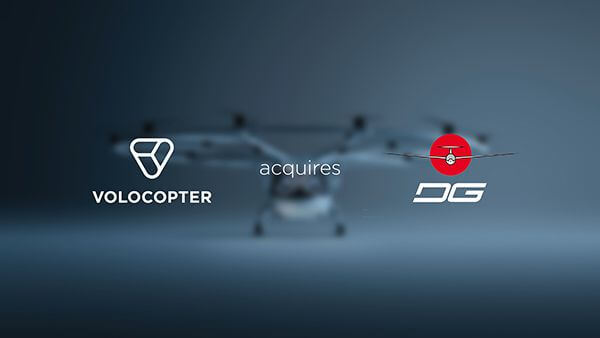
The company is acquiring its long-standing, trusted partner in innovation and production, DG Flugzeugbau, a global leader in composite aircraft production.
Through this acquisition, Volocopter is now the first and only electric vertical take-off and landing (eVTOL) company holding both the required design and production organization approvals (DOA and POA) to advance its aircraft toward commercial launch, giving it a competitive edge in the race to bring UAM to life.
UAM is an emerging part of the aviation industry focused on connectivity in and around cities. As an international pioneer of eVTOL air taxi technology, Volocopter has paved the way for creating the ecosystem necessary to introduce UAM to cities worldwide with its electric air taxi and cargo drone services.
Notably, in 2019, Volocopter was the first and remains the only eVTOL company to attain DOA from EASA (EASA Part 21J). Through its compliance with both EASA Part 21G and Part 21 J, Volocopter is poised to have the first commercial aircraft to market once the company completes type certification and obtains the air operator approval in compliance with EASA.
EASA is the regulator with the highest safety standards for aircraft certification, in the case of SC-VTOL requiring the same safety level as expected from commercial airliners. Volocopter’s certification with EASA is easily transferable across global markets, positioning it to launch services across Europe, Asia, and North America.
Florian Reuter, CEO of Volocopter: “Our ten-year partnership with DG Flugzeugbau has been an extraordinary learning experience. Having this legendary industry leader on our side to kick-start scalable and affordable UAM for people and cargo has been a game changer. Today marks an exciting milestone as we unify DG Flugzeugbau’s leadership in aviation production with Volocopter’s pioneering UAM goals to establish yet another crucial stepping-stone for our collective global endeavors.”
As part of this acquisition agreement, Volocopter will integrate DG Flugzeugbau’s aircraft production segment and EASA Part 21G POA. The entire team of highly specialized manufacturing experts will join Volocopter’s production and workshop teams. Another part of the acquisition agreement is to continue to honor existing sailplane production contracts, under the new ownership.
Holger Back, CEO of DG Aviation: “At DG Flugzeugbau, we have always continued to strive for perfection through unique innovation with gliders, vast aerodynamic improvements, and, for the past ten years, with Volocopter’s eVTOLs. We see the future in these aircraft and are excited to combine a section of our company with Volocopter to invest in the future of sustainable aviation while continuing our tradition of building gliders and maintaining aircraft.”
DG Flugzeugbau is renowned worldwide for its excellence in the production and development of glider aircraft, composite aircraft manufacturing, and the tuning of World-Championship-winning Red Bull Air-Race planes.
They have held production certification for over 40 years, adhering to the highest safety and production standards according to EASA and the Federal Aviation Office of Germany. The production facilities are located in Bruchsal near Volocopter’s headquarters and support serial production.
Together with DG Flugzeugbau, Volocopter designed and built the VC200, the first electrically powered multicopter to receive a permit to fly it in 2016 and flew this model autonomously in Dubai in 2017 and on stage at the 2018 CES in Las Vegas. Since then, the two companies have partnered to produce the Volocopter 2X, the VoloDrone, and the VoloCity.
The remaining part of the former DG Flugzeugbau is being transitioned into the newly founded DG Aviation. With their Maintenance Organisation Part CAO and their Design Organisation Part-21J, they will continue developing and maintaining aircraft and will give the complete support for DG and LS gliders.
Dual Certification: The Safety Passport for eVTOL Manufacturing
The nascent eVTOL industry is heavily regulated, with safety being the number one concern for the public and authorities like EASA. Obtaining the Production Organisation Approval (POA) in 2021 solidified Volocopter’s position. This certificate, complementing the Design Organisation Approval (DOA) received in 2019, makes Volocopter the first and only eVTOL developer to hold the two required EASA certifications for both design and internal manufacturing.
This dual certification (DOA + POA) is essential. It validates not only the safety of the VoloCity design but also the rigor and quality of its manufacturing processes. For the general public, it is the assurance that the future Volocopter flying taxi meets the highest safety standards of traditional aviation.
From Strategic Acquisition to Scaling Up Series Production
The attainment of the POA was made possible through the strategic acquisition of DG Flugzeugbau, a long-standing partner and German specialist in aircraft production. This maneuver allowed Volocopter to quickly integrate the necessary expertise and EASA Part 21G certification, moving the company into the fast lane.
Today, with its new production facilities in Bruchsal (Germany), Volocopter is entering the pre-series production phase. The goal is clear: to manufacture over 50 VoloCity aircraft per year to meet initial orders and prepare for commercial launches planned notably for the Paris Olympic Games and other metropolises such as Singapore and Rome. The efficiency and scalability of production are now at the heart of the strategy to realize the promise of Urban Air Mobility.
Volocopter: Confirmed Leadership in the Global Commercialization Race
While many eVTOL competitors are still in the design or initial testing phase, Volocopter’s dual certification (DOA and POA) gives it a crucial first-mover advantage. This early regulatory validation is a strong signal for global investors and flight operators. EASA certification is internationally recognized, facilitating the validation of Volocopter’s services across Europe, Asia, and North America.
By focusing on achieving Type Certification for the VoloCity in 2025/2026, Volocopter is closer than ever to launching its electric air transport services. Their careful, regulation-focused approach confirms their commitment not just to fly, but to fly safely, certified, and in series.
FAQ – Volocopter Flying Taxis and EASA
The POA is an EASA certification (Part 21G) that authorizes Volocopter to manufacture its aircraft in series, ensuring that production processes comply with the highest air safety standards.
Holding both DOA (design) and POA (production) allows Volocopter to manage the entire eVTOL lifecycle internally, accelerating the VoloCity’s type certification process and ensuring regulatory leadership.
Following the POA in 2021, Volocopter is aiming for EASA Type Certification for the VoloCity by 2025/2026, with a goal of commercial launch in key cities shortly thereafter.
The 2025 Horizon: Secured eVTOL Production Redefines the Future of Cities
Volocopter’s obtainment of the Production Organisation Approval (POA) in 2021 was far more than a formality; it was the establishment of the necessary infrastructure for the commercial deployment of Urban Air Mobility. By holding the keys to safe, certified design and production under the EASA umbrella, Volocopter is now ideally positioned to launch its VoloCity eVTOL into urban skies. This step confirms the maturity of the industry and paves the way for faster and more sustainable mobility solutions in our cities.
And you, are you ready to see flying taxis become a reality? Share your opinion and expectations regarding the arrival of eVTOLs like the VoloCity in the comment section below!