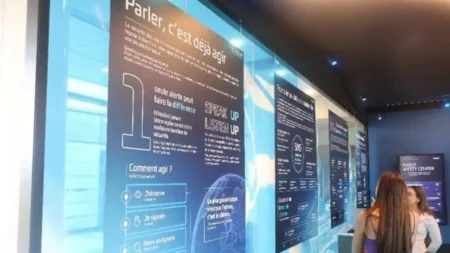


Europe’s skies are under pressure. Rising passenger demand, sustainability targets and geopolitical tensions are forcing the aviation industry to rethink how air traffic moves across the continent.
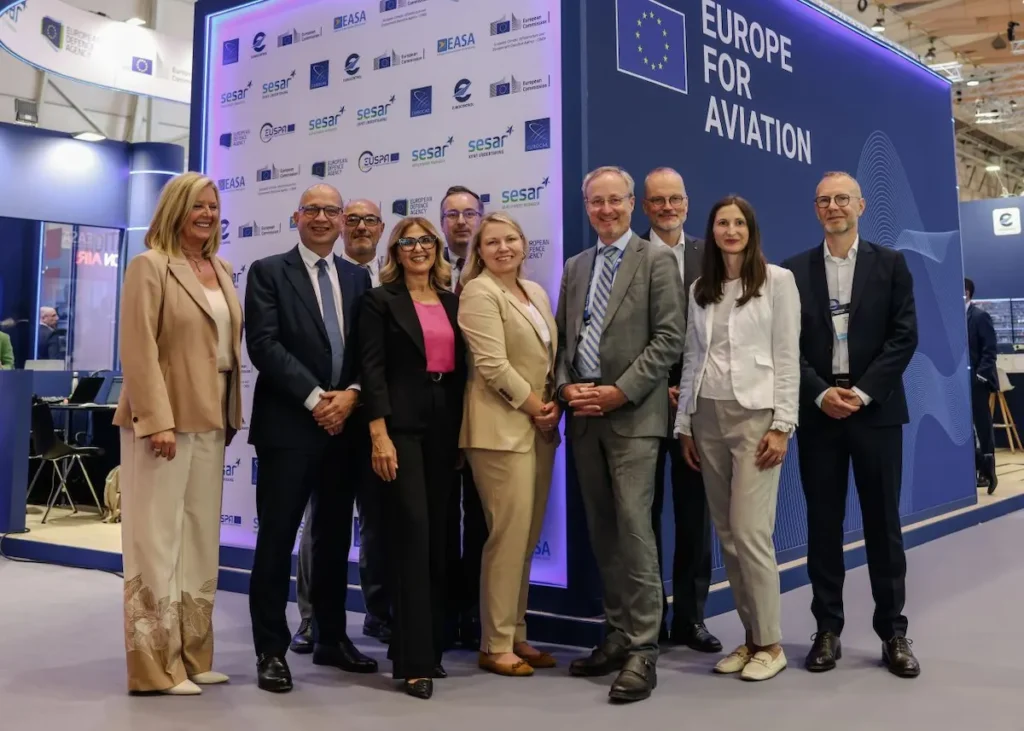
At Airspace World 2026 in Lisbon, the Europe for Aviation (E4A) initiative revealed how nine major European institutions are working together to modernise air traffic management (ATM) and create a smarter, safer and more efficient European sky.
Europe for Aviation unveils a shared ATM vision
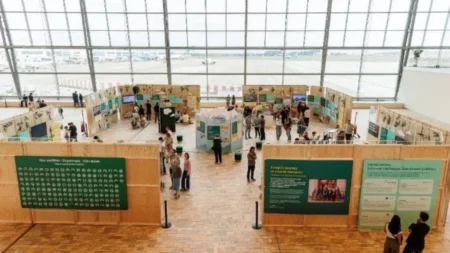
Europe for Aviation took center stage during Airspace World 2026, the leading global ATM event that gathered around 7,000 aviation professionals from 145 countries in Lisbon.
The E4A initiative united nine influential organisations under a common objective: building a more connected and digitally advanced European airspace. Rather than acting independently, these institutions showcased how coordinated policies, innovation and operational deployment can reshape the future of aviation in Europe.
Filip Cornelis, Director for Aviation at the European Commission’s DG MOVE, summarised the ambition clearly:
“We represent a united European ATM community working toward one shared goal: a smarter, more connected European sky,” Filip Cornelis, Director for Aviation at DG MOVE at the European Commission said in a speech at the stand. “Unlike most other exhibitors here in Lisbon we are not providing ATM services. Our role is assisting the operational stakeholders, and of course the Member States and partners, to shape the environment in which the ATM system works in Europe. We are putting the strategic processes in place to create a more modern and competitive European airspace.”
This collaborative vision addresses one of Europe’s biggest aviation challenges: fragmentation.
Why Europe urgently needs modern ATM systems
Air traffic management is far more than controlling aircraft in the sky. ATM oversees every stage of a flight, from gate departure to parking at the destination airport.
Europe currently operates within one of the world’s busiest and most fragmented airspaces. National boundaries, differing systems and operational complexities often reduce efficiency and increase delays.
At the same time, the aviation sector faces multiple pressures:
- Growing passenger demand
- Environmental targets requiring lower emissions
- Increased military coordination needs
- Higher expectations for operational resilience
- Digital transformation challenges
The answer proposed by Europe for Aviation relies on digitalisation, interoperability and harmonisation.
The objective is ambitious: increase airspace capacity while maintaining Europe’s excellent safety standards and reducing environmental impact.
The nine organisations shaping the future of European ATM
The strength of Europe for Aviation comes from its collective expertise. Each partner contributes a specific role to the ATM ecosystem.
Key organisations behind Europe for Aviation
| Organisation | Main Contribution |
|---|---|
| European Commission | Defines long-term aviation strategy |
| CINEA | Funds innovative aviation projects |
| EUROCONTROL | Supports efficient network operations |
| EASA | Oversees certification and safety |
| EUROCAE | Develops global aviation standards |
| EUSPA | Provides satellite navigation services |
| SESAR Joint Undertaking | Drives ATM innovation and R&D |
| SESAR Deployment Manager | Coordinates implementation of ATM solutions |
| EDA | Enhances civil-military interoperability |
This integrated ecosystem enables Europe to accelerate ATM transformation more efficiently than isolated national approaches.
Digitalisation becomes the cornerstone of ATM modernisation
One of the major themes highlighted in Lisbon was the transition toward digital and interoperable ATM systems.
Modern ATM increasingly depends on:
- Real-time data exchange
- Artificial intelligence support tools
- Satellite-based navigation
- Automated traffic flow management
- Cross-border operational harmonisation
The role of the Single European Sky strategy remains central in this transformation.
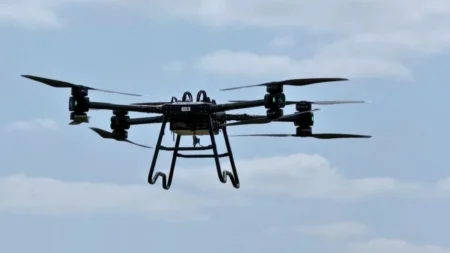
The European Union Aviation Safety Agency continues to support innovation through certification and standardisation initiatives. Recent developments such as the EASA-certified U-space service provider advancing drone traffic integration in Europe demonstrate how digital aviation ecosystems are expanding beyond traditional commercial aviation.
Similarly, new certification frameworks continue to emerge. The evolution of advanced propulsion systems highlighted in the ITP Aero EASA certification programme for future aerospace technologies illustrates Europe’s broader commitment to innovation and sustainability.
Sustainability is becoming a core ATM objective
Modern ATM is no longer only about efficiency and safety. Environmental performance now sits at the heart of aviation strategy.
Optimised flight trajectories can significantly reduce:
- Fuel consumption
- CO₂ emissions
- Flight holding times
- Airport congestion
By improving traffic flows and reducing unnecessary route deviations, Europe aims to make aviation greener without compromising operational performance.
This approach aligns with broader European climate ambitions and reinforces the importance of collaborative ATM modernisation.
Civil and military cooperation gains strategic importance
Geopolitical tensions have increased the need for flexible airspace management across Europe.
The European Defence Agency plays a critical role in ensuring military mobility while maintaining safe civilian operations. Better interoperability between civil and military stakeholders helps optimise shared airspace usage during periods of operational complexity.
This dual-use approach is becoming increasingly important as Europe adapts to new security realities.
SESAR remains the engine of European ATM innovation
The SESAR programme continues to act as the technological backbone of ATM modernisation in Europe.
SESAR focuses on:
- Automation technologies
- Digital tower systems
- Predictive traffic management
- Advanced communication systems
- Sustainable operational procedures
The deployment phase is equally critical. Research alone cannot modernise ATM unless innovations are rapidly implemented across operational networks.
Readers interested in broader European aviation transformation can also explore how EASA and EUROCONTROL are preparing the future of European aviation through collaborative innovation.
Meanwhile, certification processes continue evolving for emerging aircraft technologies, including initiatives like the EASA permit-to-fly framework supporting innovative electric aviation projects.
For more insights into air traffic management developments, readers can consult the dedicated air traffic management industry coverage and ATM innovation analysis section.
Airspace World confirms Europe’s global ATM influence
Airspace World 2026 demonstrated Europe’s ambition to remain a global leader in ATM innovation.
The event highlighted how cooperation between regulators, industry stakeholders and operational agencies can accelerate transformation across the aviation sector.
Europe’s challenge is no longer simply technological. It is organisational, political and operational.
By aligning strategy, funding, innovation and deployment, Europe for Aviation hopes to create a future-proof ATM ecosystem capable of handling tomorrow’s aviation demands.
Additional information about aviation regulation and safety initiatives can be found on the official European Union Aviation Safety Agency platform dedicated to aviation safety and certification.
Frequently Asked Questions About Europe for Aviation and ATM
Europe for Aviation (E4A) is a collaborative initiative bringing together nine European aviation organisations to modernise air traffic management across Europe.
ATM modernisation helps reduce delays, improve safety, lower emissions and increase airspace capacity in one of the world’s busiest aviation regions.
EASA ensures the certification, safety oversight and standardisation of ATM systems and aviation technologies across Europe.
Conclusion : Europe for Aviation and the Future of ATM
Europe for Aviation represents more than a trade fair initiative. It symbolises Europe’s determination to modernise one of the world’s most complex aviation environments through collaboration, digitalisation and innovation.
As air traffic demand continues to rise, ATM transformation will directly impact passenger experience, operational efficiency and environmental sustainability across Europe.
The real question now is whether Europe can accelerate deployment quickly enough to meet future aviation challenges while maintaining its world-class safety standards.
What do you think will be the biggest challenge for Europe’s future ATM system?