
DFS Aviation Services initiates a strategic feasibility study to modernize Albanian air traffic control through innovative Remote Tower Control applications.
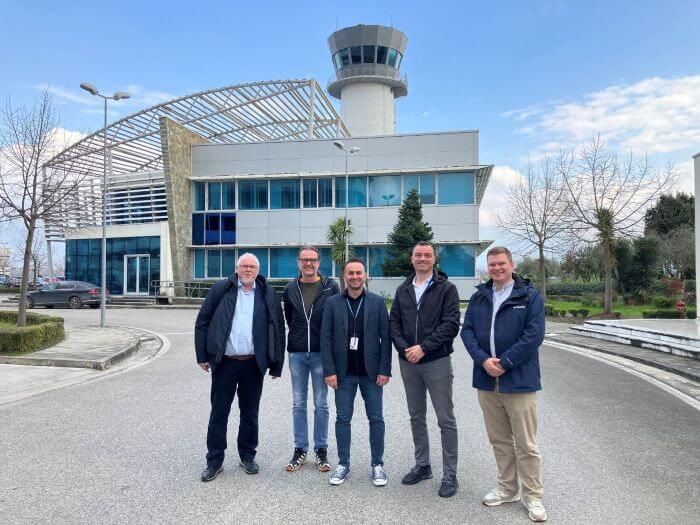
The future of aviation infrastructure is shifting toward digitalization, and Albania is determined to stay ahead of the curve. DFS Aviation Services (DAS) has officially launched a comprehensive feasibility study for Albcontrol, the Albanian air navigation service provider, to evaluate the implementation of Remote Tower Control (RTC) applications. This consulting project aims to provide a robust strategic foundation for the future of various tower locations across the country, ensuring operational efficiency and safety.
DFS Aviation Services: A partner for innovation
DFS Aviation Services is globally recognized for its expertise in air traffic management (ATM). By leveraging its deep industry knowledge, the company helps aviation stakeholders navigate complex technological transitions. This collaboration with Albcontrol is not the first time the firm has demonstrated its leadership; for instance, the synergy between DFS Aviation Services and NRIEE highlights their commitment to global ATM advancements.
In this specific Albanian project, the goal is to assess how modern technology can replace or supplement traditional infrastructure. The study, expected to last between three and four months, will offer a neutral, manufacturer-independent analysis of the best path forward for Albania’s airspace.
Comprehensive evaluation of ATM solutions
The project isn’t just about one technology; it’s about finding the right fit for Albania’s unique geographical and operational needs. DFS Aviation Services is currently evaluating several technical and operational options:
- Conventional Towers: Maintaining the traditional physical presence at airports.
- Mobile Towers: Flexible solutions for temporary or emergency needs.
- Remote Tower Systems (RTS): Controlling a single airport from a distant location using high-definition cameras and sensors.
- Remote Tower Control Centres (RTCC): A centralized hub capable of managing multiple airports simultaneously while serving as a contingency facility.
By comparing these options, DAS ensures that Albcontrol can make an informed decision based on safety, scalability, and cost-effectiveness.
Technical roadmap and operational applicability
Once the initial evaluation is complete, DFS Aviation Services will dive deeper into the most viable option. This second phase is crucial as it moves from theory to actionable planning. The experts at DFS Aviation Services will focus on developing:
- Technical specifications for the chosen remote tower system.
- Operational applicability to ensure seamless integration into existing workflows.
- A requirements document that will serve as the legal and technical basis for future international tenders.
This structured approach minimizes risk and ensures that the transition to new technologies is handled with the highest level of professional oversight.
Financial transparency and cost-benefit analysis
One of the most critical components of the study is the cost-benefit analysis. Beyond the « cool factor » of new technology, Albcontrol needs to understand the economic implications. DFS Aviation Services will provide a transparent view of the required investment versus the long-term operational savings.
Remote towers offer significant potential for optimizing resource allocation. By centralizing control, service providers can reduce the need for duplicated equipment and staffing at smaller, less-frequented airfields, allowing for a more sustainable business model without compromising on safety.
Strengthening Albania’s aviation infrastructure
For Albcontrol, this study is a major step toward aligning with European and international standards. Dritan Isaku, Director General at Albcontrol, emphasized that this project is about enhancing operational resilience. Innovative technologies are no longer a luxury but a necessity to ensure high-quality service in an increasingly busy European sky.
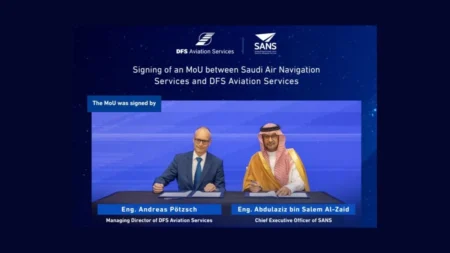
Andreas Pötzsch, Managing Director of DAS, noted that remote tower concepts are particularly beneficial for small and medium-sized locations, where they can drastically improve flexibility and efficiency.
FAQ: DFS Aviation Services and Remote Towers
DFS Aviation Services is conducting a neutral feasibility study to help Albcontrol decide on the future of its air traffic control towers, specifically evaluating remote tower technologies.
These centers use high-resolution cameras, sensors, and real-time data transmission to allow air traffic controllers to manage airport traffic from a different geographical location.
Albcontrol aims to modernize its infrastructure in line with European standards, seeking to improve operational resilience, optimize resources, and maintain the highest safety levels.
Conclusion: A digital horizon for Albcontrol
The collaboration between DFS Aviation Services and Albcontrol marks a turning point for Albanian aviation. By exploring Remote Tower Control, Albania is positioning itself as a forward-thinking player in the Balkan region. This study will not only result in a technical report but will serve as a reliable roadmap for the next decade of air traffic management in the country. As the aviation industry continues to recover and grow, embracing such digital transformations will be the key to maintaining a safe and efficient sky.
What do you think about the transition to Remote Towers? Do you believe centralized control centers are the future for all regional airports? Share your thoughts in the comments below!