

The Munich Airport has officially confirmed its status as a leading European aviation powerhouse with a massive surge in passenger and cargo traffic this year.

Hello to all aviation enthusiasts! If you closely follow the evolution of European skies like I do, you know that certain hubs truly stand out. For me, 2025 marks a decisive turning point for Bavaria. I am thrilled to share the exceptional results of Munich Airport, which has now established itself as the fastest-growing airport in the German-speaking region.
Munich Airport: The Undisputed Leader of the DACH Region
The year 2025 will go down in history. Munich Airport welcomed a stunning total of 43.4 million passengers. To give you an idea of the scale of this performance, this represents an increase of 1.8 million travelers compared to the previous year.
Personally, what strikes me most is that this +4.4% growth isn’t just a figure on a balance sheet. It is concrete proof that the hub’s development strategy is paying off. By regularly checking updates on the Munich Airport, one quickly realizes that this momentum is part of a long-term vision. No other airport in Germany, Austria, or Switzerland recorded such a high absolute increase in passenger numbers this year.
A Global Network Expanding Worldwide
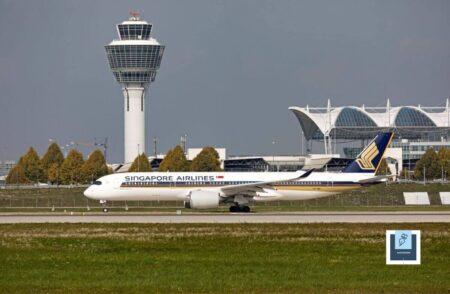
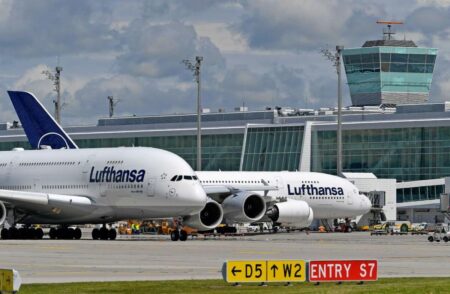
The airport’s network continues to broaden its horizons. In 2025, you could fly from Munich to 232 destinations across 71 countries. This is an exceptional reach that connects Bavaria to the entire world through the operations of 96 regular airlines.
Long-haul traffic was the true engine of this growth, with a spectacular 8.5% increase. For me, this reflects the growing appeal of Munich as a primary departure point for Asia and the Americas. European traffic also remained strong with a 4.3% rise, driven largely by Mediterranean destinations. Flight movements followed this upward curve with 337,000 takeoffs and landings, up 3% year-on-year.
Cargo Volume Surpasses Pre-Pandemic Records
While passenger transport is the most visible aspect for you, cargo activity is just as vital for the economy. In 2025, air freight volume jumped by 10% to reach 340,000 tons.
This figure is crucial: it is 2% higher than pre-coronavirus levels. This proves that Munich Airport has once again become a central nervous system for international trade. As an observer, I find it fascinating to see how one infrastructure can stimulate the prosperity of the entire State of Bavaria, securing jobs and facilitating the region’s high-tech exports.
Innovation and Punctuality: Enhancing Your Passenger Experience
Despite the heavy traffic growth, Munich Airport managed the feat of improving its on-time performance. With a rate exceeding 75%, it ranks among the top three most punctual major hubs in Europe. This is a vital point for your comfort during connections.
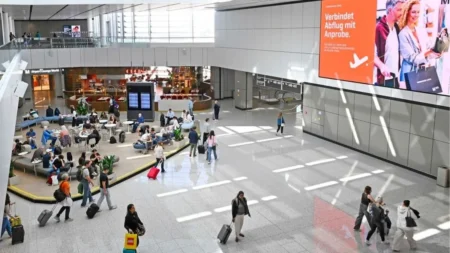
This success is built on massive technological investments. Since April 2025, Terminal 2 has been fully equipped with next-generation CT scanners. The result? 95% of you now pass through security in less than ten minutes. The Free State of Bavaria invested over €45 million to modernize these facilities, proving its commitment to maintaining a « Premium » service standard. To learn more about official services, feel free to visit the Munich Airport website.
2025 Annual Traffic Results at a Glance
| Indicator | 2025 | 2024 | Change |
| Passenger Volume | 43.4 million | 41.6 million | +4.4% |
| Flight Movements | 337,450 | 327,228 | +3.1% |
| Air Freight (tons) | 340,000 | 307,635 | +10.4% |
FAQ: Everything You Need to Know About Munich Airport’s Performance
The massive increase in passenger numbers is primarily due to the dynamic growth of long-haul flights (+8.5%) and the expansion of the route network to 232 global destinations. Bavaria’s economic attractiveness and the hub’s operational efficiency allowed it to attract 1.8 million additional travelers in a single year.
Thanks to a €45 million investment, the airport has deployed ultra-modern CT scanners, particularly in Terminal 2. This technology allows almost all passengers to complete security checks in under ten minutes, significantly improving flow and passenger comfort.
In 2025, Munich became the airport with the highest absolute passenger growth in the German-speaking (DACH) region. It also ranks in the European top three for punctuality, despite external challenges such as weather conditions and operational restrictions.
What Lies Ahead for the Bavarian Hub?
In conclusion, I believe Munich Airport has proven its resilience and capacity for innovation. The numbers speak for themselves: solid growth, record-breaking cargo volumes, and a passenger experience optimized by technology. It remains an indispensable economic engine for Southern Germany.
How about you? Have you had the chance to travel through Munich this year? What do you think about the speed of the new security scanners? Share your thoughts and travel experiences with us in the comments!